When recovery feels slow or incomplete, deeper healing is often needed. Explore an Ayurvedic approach to restore strength, movement, and resilience after trauma.
Accidents can disturb the body far beyond the initial injury. Even after fractures heal or surgeries are completed, many individuals continue to experience chronic pain, stiffness, nerve damage, poor wound healing, reduced mobility, and emotional distress. In Ayurveda, post-accident conditions are understood primarily as Vata imbalance, often accompanied by Pitta-driven inflammation and Kapha-related stagnation. Trauma disrupts the normal flow of Prana through the body’s channels (Nadis), affecting circulation, nerve communication, and tissue regeneration. When Agni (digestive fire) weakens due to immobility, stress, or prolonged medication use, Ama (metabolic toxins) accumulate, delaying healing and increasing pain. Ayurvedic care focuses on restoring balance, clearing Ama, strengthening immunity, and supporting the body’s innate healing ability not just suppressing symptoms.

Every person is different. We begin with Pulse Diagnosis (Nadi Pariksha) and a detailed health history to understand your constitution and current imbalance. Your plan may include:
All recommendations are made by qualified Ayurvedic physicians and adjusted to your tolerance and preferences.
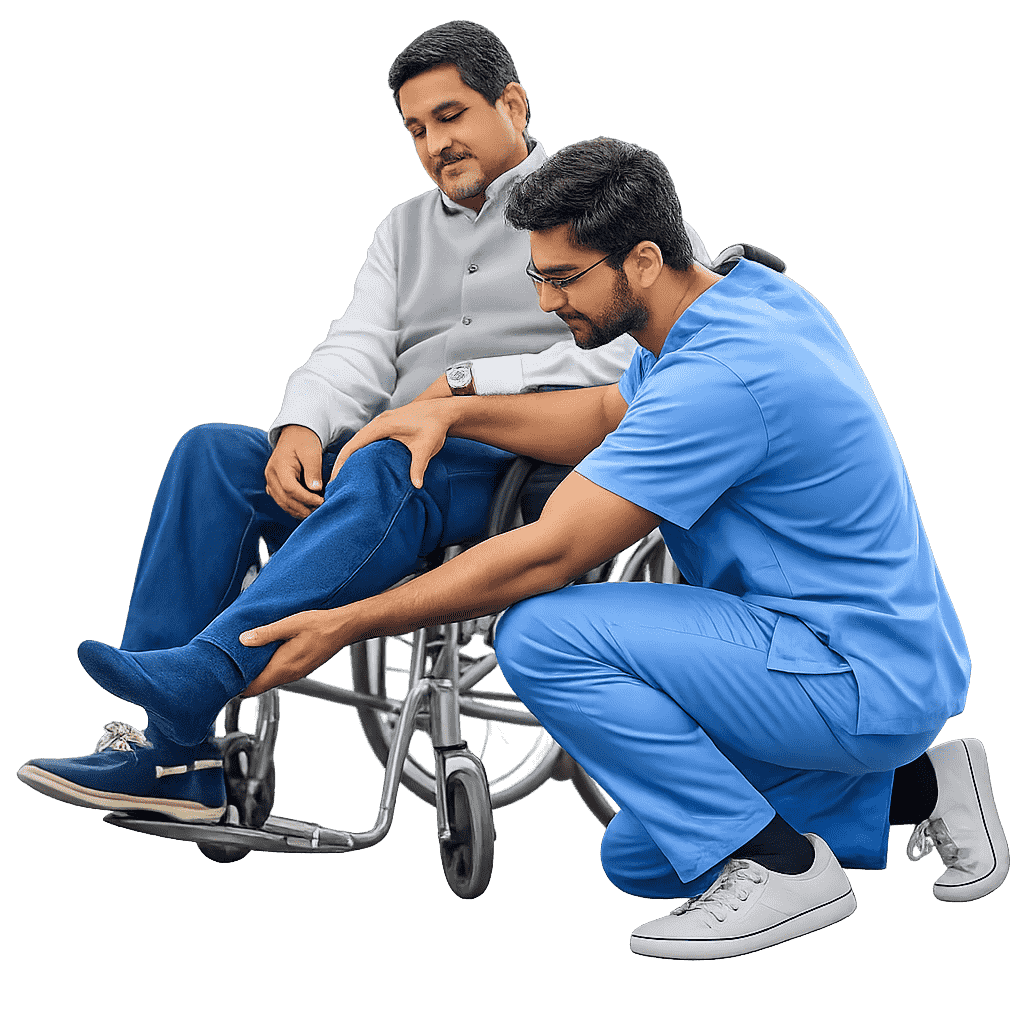
When followed consistently, many people report:
(Experiences vary by individual constitution, age, and lifestyle. Please continue medical monitoring with your physician.)
Clear, honest answers about how our Ayurvedic care works in real life.
Ayurveda aims to support tissue repair, reduce pain, and restore balance.
Some people experience gradual improvement within days. Recovery timelines vary based on injury severity and consistency of care.
Yes
This information is educational and not a substitute for medical advice. Please consult your physician for personalized care.