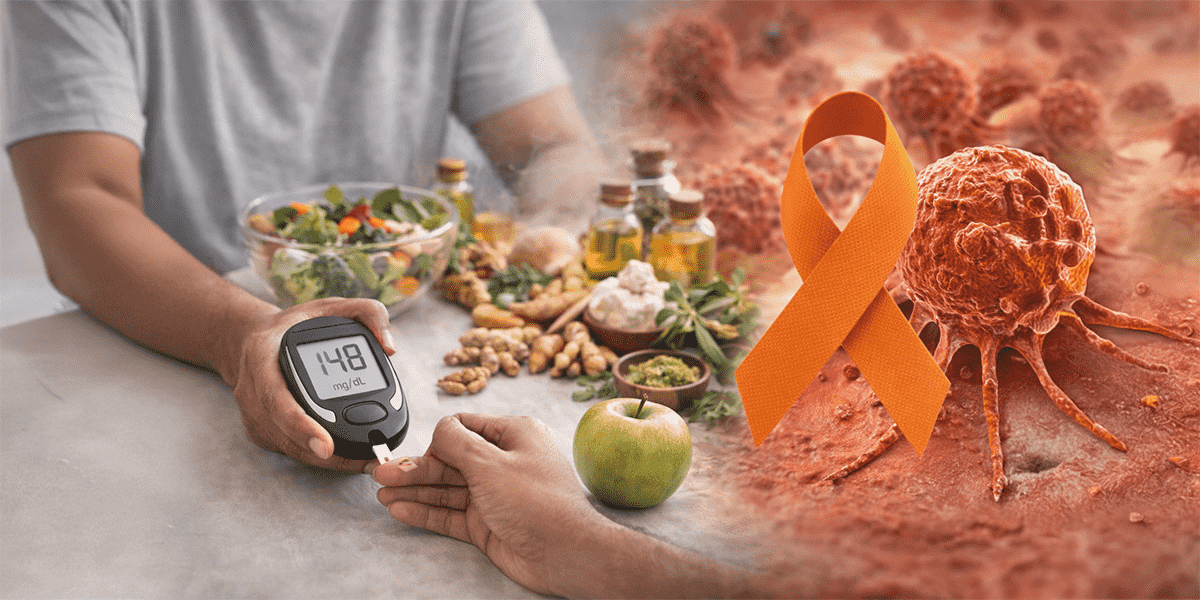
For decades, cancer research focused primarily on genetic mutations. Modern science now recognizes that cancer is also influenced by metabolic and inflammatory processes within the body. Tumor cells alter how they produce and use energy, allowing them to grow and divide more rapidly than normal cells. This shift in energy metabolism has been one of the most studied features of cancer biology.
Nearly a century ago, Otto Warburg observed that cancer cells preferentially utilize glycolysis the breakdown of glucose even when oxygen is present. This phenomenon, known as the Warburg effect, enables cancer cells to rapidly generate the building blocks necessary for proliferation (Vander Heiden et al., 2009). However, it is essential to clarify that all human cells require glucose for survival. Cancer cells do not uniquely “consume sugar” in isolation from the rest of the body. The concern in modern medicine is not glucose itself, but chronic metabolic dysregulation.
When carbohydrates are consumed, they are broken down into glucose, leading to the release of insulin from the pancreas. Insulin allows cells to absorb glucose from the bloodstream. Beyond its role in blood sugar regulation, insulin functions as a growth-signaling hormone. It activates pathways involved in cell proliferation and survival, particularly through insulin and insulin-like growth factor (IGF-1) receptors.
In states of insulin resistance commonly associated with obesity, type 2 diabetes, and sedentary lifestyles the body produces higher levels of insulin to maintain glucose control. Persistently elevated insulin levels, known as hyperinsulinemia, have been associated with increased risk of certain cancers, including colorectal, postmenopausal breast, pancreatic, and endometrial cancers (Giovannucci et al., 2010; Gallagher & LeRoith, 2011).
This association does not mean insulin causes cancer directly. Rather, excess insulin may create a biological environment that supports tumor growth if malignant cells are already present. The underlying mechanisms involve activation of signaling pathways such as PI3K/Akt/mTOR, which regulate cellular growth and metabolism.
Refined sugar consumption contributes to weight gain, insulin resistance, and systemic inflammation. Obesity is now recognized as a major modifiable risk factor for multiple types of cancer. The International Agency for Research on Cancer has concluded that excess body fat is causally linked to at least thirteen cancer types (Lauby-Secretan et al., 2016).
Adipose tissue is not merely a fat storage site. It acts as an active endocrine organ, producing inflammatory cytokines and altering hormone balance. Chronic inflammation and hormonal changes associated with obesity may contribute to cancer development and progression. Therefore, the concern regarding sugar lies primarily in its role in promoting long-term metabolic dysfunction rather than acting as a direct carcinogen.
Current evidence supports the importance of maintaining metabolic stability in reducing cancer risk. Large international reviews from the World Cancer Research Fund emphasize the protective role of healthy body weight, regular physical activity, and diets rich in vegetables, fruits, whole grains, and legumes (WCRF/AICR, 2018).
Rather than eliminating carbohydrates entirely, the focus is on quality and metabolic balance. Whole-food sources of carbohydrates containing fiber have a different physiological impact compared to refined sugars and ultra-processed foods. Fiber slows glucose absorption, improves insulin sensitivity, and supports gut microbiome health.
Extreme carbohydrate restriction or “sugar elimination” is not currently an established cancer treatment strategy in conventional oncology. Research into metabolic therapies, including ketogenic interventions, remains under investigation and should only be undertaken under medical supervision (Klement & Champ, 2014).
Traditional systems of medicine, including Ayurveda, have long emphasized moderation in diet, structured eating patterns, and the prevention of metabolic imbalance. Contemporary integrative medicine increasingly recognizes that long-term dietary habits influence hormonal regulation, inflammatory pathways, and overall systemic resilience.
However, it is critical to state clearly that no dietary strategy should replace evidence-based oncology care. Cancer management requires multidisciplinary medical evaluation, appropriate treatment planning, and ongoing monitoring. Dietary and lifestyle optimization should be viewed as supportive measures within a broader medical framework.
Carbohydrates and sugar do not directly cause cancer. The scientific concern lies in chronic metabolic imbalance, persistent insulin elevation, obesity, and systemic inflammation. These factors may influence cancer risk and progression in susceptible individuals. Maintaining healthy body weight, improving insulin sensitivity through physical activity, consuming predominantly whole foods, and minimizing ultra-processed sugars represent evidence-based strategies that support long-term metabolic health. Cancer prevention and care require comprehensive medical oversight. Nutrition is one important component, but it is not a standalone solution.
Gallagher, E.J., & LeRoith, D. (2011). Diabetes, cancer, and metformin: connections of metabolism and cell proliferation. Annals of the New York Academy of Sciences [LINK]
Giovannucci, E. et al. (2010). Diabetes and cancer: a consensus report. [LINK]
Klement, R.J., & Champ, C.E. (2014). Calories, carbohydrates, and cancer therapy with radiation: exploiting the five R’s through dietary manipulation. [LINK]
Lauby-Secretan, B. et al. (2016). Body fatness and cancer—viewpoint of the IARC Working Group. [LINK]
Vander Heiden, M.G., Cantley, L.C., & Thompson, C.B. (2009). Understanding the Warburg effect: the metabolic requirements of cell proliferation. [LINK]
World Cancer Research Fund/American Institute for Cancer Research (2018). Diet, Nutrition, Physical Activity and Cancer: A Global Perspective. [LINK]
This article is for educational purposes only and does not constitute medical advice. Cancer diagnosis, prevention, and treatment require evaluation by qualified oncology professionals. Dietary changes should be discussed with a healthcare provider, especially during active cancer treatment.