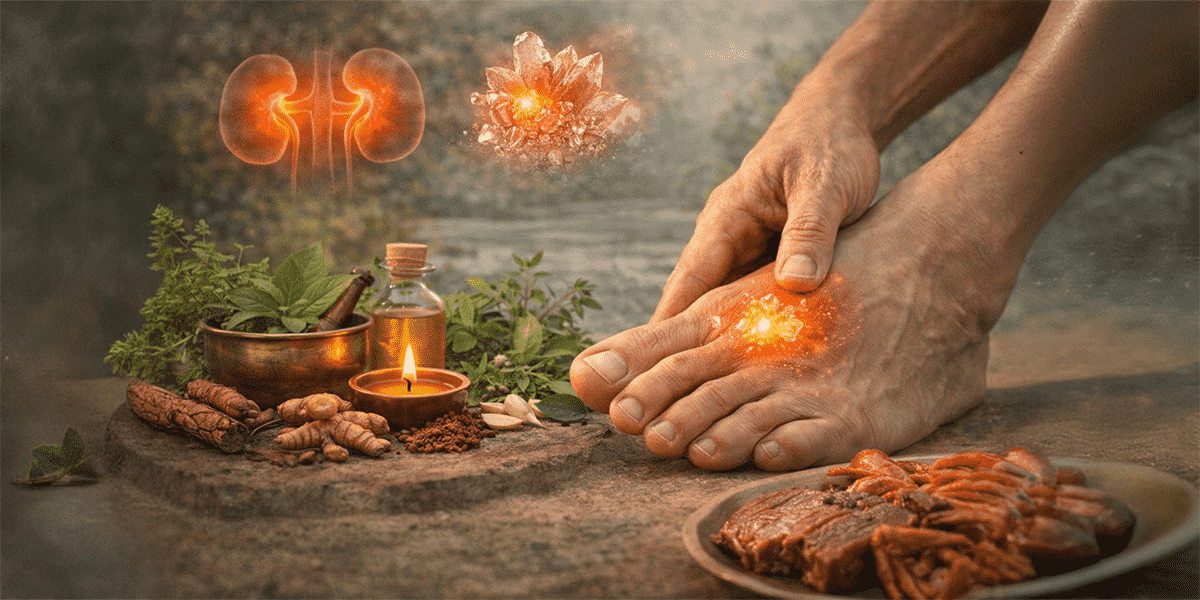
Uric acid is a metabolic byproduct formed during the breakdown of purines, substances naturally present in the body and in certain foods. Under normal conditions, uric acid dissolves in the blood, is filtered by the kidneys, and is excreted in urine. However, when production increases or elimination decreases, blood levels may rise a condition known as hyperuricemia.
Persistent hyperuricemia can lead to the formation of urate crystals in joints and tissues, triggering gout, a painful inflammatory arthritis characterized by redness, swelling, and acute joint pain. Elevated uric acid levels are also associated with metabolic syndrome, obesity, hypertension, and chronic kidney disease (Dalbeth et al., 2016).
Conventional medical management may include medications such as xanthine oxidase inhibitors, uricosuric agents, and anti-inflammatory drugs during acute attacks. Lifestyle modification remains central to long-term control. Ayurveda approaches elevated uric acid within a broader metabolic framework, focusing on digestion, tissue metabolism, and systemic balance.
In classical Ayurvedic texts, conditions resembling gout are described under the term Vatarakta. This disorder is understood as an interaction between aggravated Vata and vitiated Rakta (blood tissue), often associated with dietary excess, sedentary habits, and impaired digestion. Ayurvedic theory also emphasizes the concept of ama, described as a byproduct of incomplete digestion and metabolic inefficiency. While not equivalent to uric acid itself, ama may be interpreted in contemporary terms as reflecting systemic inflammatory burden and impaired metabolic processing.
Modern biomedical research similarly recognizes that elevated serum uric acid levels are closely associated with insulin resistance, central obesity, hypertension, and other components of metabolic syndrome, suggesting an important link between uric acid metabolism and broader cardiometabolic dysfunction (Soltani et al., 2013). Both perspectives therefore emphasize metabolic regulation as central to long-term management rather than symptom suppression alone.
Dietary purines contribute to uric acid production, particularly from red meat, organ meats, and certain seafood. Alcohol, especially beer, and sugar-sweetened beverages rich in fructose can also elevate uric acid levels (Choi et al., 2004). Weight management and reduction of fructose intake have demonstrated measurable reductions in uric acid levels (Dalbeth et al., 2016). Hydration supports renal excretion and is a cornerstone of both modern and traditional advice.
Ayurveda similarly emphasizes dietary moderation, regular meal timing, and avoidance of heavy, excessively rich foods in individuals prone to gout-like symptoms. Easily digestible meals, adequate hydration, and balanced spice usage are traditionally recommended to support digestion and reduce metabolic strain. Importantly, extreme dietary restriction or unsupervised fasting may worsen metabolic instability and should be avoided without guidance.
Several herbs traditionally used in Ayurveda have been studied for anti-inflammatory or metabolic effects. Guduchi (Tinospora cordifolia) has demonstrated anti-inflammatory and immunomodulatory properties in experimental studies (Upadhyay et al., 2010). Neem (Azadirachta indica) has shown antioxidant and anti-inflammatory activity in preclinical research (Subapriya & Nagini, 2005). Triphala, a classical polyherbal formulation, has been studied for digestive and metabolic benefits.
However, high-quality randomized clinical trials specifically evaluating these herbs for hyperuricemia remain limited. Herbal interventions should therefore be considered supportive and not substitutes for medically indicated urate-lowering therapy. Additionally, herbal preparations may interact with medications used for gout or kidney disease. Clinical supervision is essential.
In selected cases, structured Ayurvedic programs may include components of Panchakarma aimed at digestive regulation and metabolic recalibration. Preparatory oil therapies and mild elimination procedures are traditionally believed to reduce systemic imbalance. Modern research examining comprehensive Ayurvedic lifestyle interventions has shown changes in inflammatory markers and gene expression patterns (Peterson et al., 2016). However, specific evidence for uric acid reduction through Panchakarma alone remains limited. Intensive cleansing therapies are not appropriate during acute gout flares, severe inflammation, kidney impairment, or systemic illness. Careful patient selection is required.
Elevated serum uric acid levels have been associated with components of metabolic syndrome, including insulin resistance, hypertension, and central obesity, suggesting a broader link between uric acid metabolism and cardiometabolic dysfunction. Stress influences hormonal regulation and inflammatory pathways that contribute to metabolic dysfunction. Ayurveda places strong emphasis on daily routine, adequate rest, and stress regulation. Mind–body practices such as breathing techniques and gentle yoga may support autonomic balance and metabolic stability, though they should complement rather than replace medical management.
Hyperuricemia and gout are complex metabolic conditions requiring accurate diagnosis and monitoring. Laboratory testing, renal function assessment, and cardiovascular risk evaluation are essential components of care. Ayurvedic strategies may support long-term metabolic balance through dietary regulation, lifestyle modification, and carefully supervised herbal therapy. However, they should be integrated with not positioned against conventional medical treatment.
Effective management focuses on sustained lifestyle correction, weight regulation, adequate hydration, and appropriate pharmacologic therapy when indicated. The goal is not simply lowering uric acid temporarily, but reducing recurrence, protecting joint integrity, and supporting overall metabolic health.
Choi, H.K. et al. (2004). Purine-rich foods, dairy and protein intake, and the risk of gout. [LINK]
Dalbeth, N. et al. (2016). Gout. [LINK]
Soltani, Z. et al. (2013). Potential Role of Uric Acid in Metabolic Syndrome. [LINK]
Peterson, C.T. et al. (2016). Identification of altered metabolomic profiles following a Panchakarma-based Ayurvedic intervention in healthy subjects. [LINK]
Subapriya, R. & Nagini, S. (2005). Medicinal properties of neem leaves: A review. [LINK]
Upadhyay, A.K. et al. (2010). Tinospora cordifolia: Pharmacological review. [LINK]
This article is intended for educational purposes only and does not constitute medical advice. Elevated uric acid levels and gout require proper medical diagnosis and monitoring. Ayurvedic therapies should be undertaken only under qualified supervision and should not replace prescribed urate-lowering medications or specialist care when indicated.