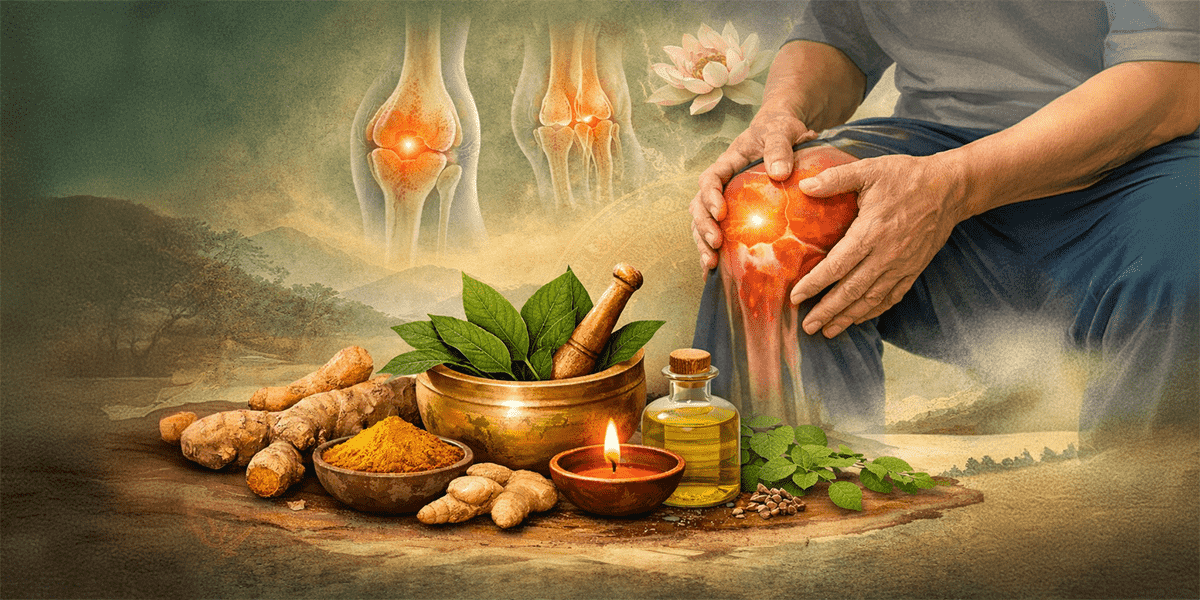
Arthritis is a broad term describing conditions that affect the joints, most commonly osteoarthritis and rheumatoid arthritis. Osteoarthritis involves progressive cartilage degeneration and structural joint changes, while rheumatoid arthritis is an autoimmune inflammatory disorder (Hunter & Bierma-Zeinstra, 2019). Both can cause pain, stiffness, reduced mobility, and impaired quality of life.
Modern research increasingly recognises that arthritis is not solely a “wear and tear” condition. Inflammation, metabolic dysfunction, obesity, muscle weakness, sleep disturbance, and psychological stress all contribute to symptom severity and disease progression (Glyn-Jones et al., 2015).
Ayurveda, the classical system of medicine originating in India, approaches joint disorders through this broader systemic lens. Rather than focusing exclusively on the joint itself, it considers digestion, tissue nutrition, metabolic balance, and lifestyle patterns as interconnected influences on musculoskeletal health.
In Ayurvedic texts, joint disorders resembling osteoarthritis are often described under the term Sandhivata. This condition is traditionally associated with aggravation of Vata dosha the regulatory principle governing movement and nerve impulses. Classical descriptions include joint pain, dryness, stiffness, and restricted mobility.
Inflammatory presentations with swelling, warmth, or redness may reflect additional physiological disturbances in Ayurvedic theory. Importantly, Ayurveda does not interpret joint disease as purely localised; it considers impaired digestion (Agni), tissue depletion, and systemic imbalance as contributing factors.
Although Ayurvedic terminology differs from biomedical language, there are conceptual parallels. For example, modern studies show that metabolic syndrome, insulin resistance, and low-grade systemic inflammation can accelerate cartilage degradation and worsen arthritis symptoms (Courties et al., 2015).
Excess body weight is one of the strongest modifiable risk factors for knee osteoarthritis. Even modest weight reduction significantly decreases mechanical load on joints and improves pain outcomes (Messier et al., 2013). Inflammatory dietary patterns also influence symptom severity.
Mediterranean-style diets rich in vegetables, legumes, healthy fats, and whole foods have been associated with improved inflammatory markers and reduced arthritis symptoms (Sköldstam et al., 2003). From an Ayurvedic perspective, dietary regulation aims to optimise digestion and reduce inflammatory burden through freshly prepared meals, adequate nourishment, and avoidance of heavily processed foods.
Certain botanicals traditionally used in Ayurveda have been studied scientifically. Curcumin, derived from turmeric (Curcuma longa), has demonstrated anti-inflammatory effects and modest improvement in osteoarthritis symptoms in clinical trials (Bannuru et al., 2018). Ginger (Zingiber officinale) has shown small but measurable reductions in osteoarthritis pain (Bartels et al., 2015).
However, dietary and herbal interventions should be individualised. Patients with diabetes, cardiovascular disease, autoimmune conditions, or gastrointestinal disorders require careful clinical consideration before making significant dietary or supplemental changes.
Exercise remains one of the most consistently supported interventions in arthritis management. Structured physical activity improves joint function, reduces pain, and strengthens surrounding musculature (Fransen et al., 2015). Muscle strength plays a critical role in reducing joint load and improving biomechanical stability.
Gentle yoga-based interventions have shown benefits in pain reduction and improved function in some arthritis populations (Moonaz et al., 2015). Ayurveda similarly emphasises regular, moderate activity adapted to individual capacity. Importantly, exercise prescriptions must be tailored to disease stage. High-impact activities may aggravate advanced joint degeneration, while complete inactivity can worsen stiffness and muscle loss.
Chronic pain and sleep disturbance frequently coexist. Research shows that poor sleep increases inflammatory markers and pain sensitivity (Irwin et al., 2016). Similarly, psychological stress influences immune regulation and inflammatory pathways.
Ayurveda traditionally places strong emphasis on consistent daily routines and restorative sleep. While modern research does not frame these concepts in doshic terms, evidence supports the importance of sleep hygiene and stress regulation in chronic inflammatory conditions. Mind–body practices such as breathing exercises and structured relaxation techniques may support pain coping mechanisms, though they should complement rather than replace conventional management strategies.
Several Ayurvedic herbs traditionally used for joint health have undergone clinical investigation. Boswellia serrata has demonstrated reductions in pain and improvements in function in osteoarthritis trials (Sengupta et al., 2008). Curcumin preparations have shown comparable symptomatic benefit to some non-steroidal anti-inflammatory drugs in selected studies, with fewer gastrointestinal side effects when appropriately dosed (Bannuru et al., 2018).
Clinical evidence indicates that an aqueous extract of Withania somnifera roots and leaves may significantly reduce knee joint pain, stiffness, and functional disability in adults with osteoarthritis symptoms compared with placebo, with good tolerability over 12 weeks of treatment (Ramakanth et al., 2016). It is essential to emphasise that herbal medicines are biologically active compounds. They may interact with anticoagulants, corticosteroids, immunosuppressants, and other prescription medications.
Traditional Ayurvedic therapies such as oil applications (Abhyanga), local oil retention treatments, and steam-based therapies are used in structured settings to promote muscular relaxation and improve circulation. Evidence for these procedures is still emerging. Some integrative clinical studies suggest that multimodal Ayurvedic treatment programs may improve functional outcomes in knee osteoarthritis when used alongside conventional care (Kessler et al., 2013). However, larger high-quality trials are needed. Such procedures should be performed by trained professionals and avoided in acute inflammatory flares, active infections, or unstable medical conditions.
Effective arthritis management requires accurate diagnosis, imaging when necessary, and laboratory evaluation in inflammatory conditions. Conventional medicine plays a central role in slowing autoimmune progression, managing severe inflammation, and addressing structural damage. Ayurveda may serve as a complementary approach focused on lifestyle regulation, dietary optimisation, metabolic health, and carefully supervised herbal support. When integrated responsibly, these strategies may contribute to improved symptom management and functional capacity.
The primary goals in arthritis care are preservation of mobility, reduction of inflammation, prevention of disease progression, and maintenance of overall health. Patients experiencing persistent swelling, systemic symptoms, rapid joint deformity, or severe functional limitation should seek prompt medical evaluation.
Bannuru, R.R. et al. (2018). Comparative effectiveness of pharmacologic interventions for knee osteoarthritis. [LINK]
Courties, A. et al. (2015). Metabolic syndrome-associated osteoarthritis. [LINK]
Bartels, E.M. et al. (2015). Efficacy and safety of ginger in osteoarthritis patients: A meta-analysis of randomized placebo-controlled trials [LINK]
Ramakanth, G.S.H., Uday Kumar, C., Kishan, P.V. & Usharani, P. (2016). A randomized, double-blind, placebo-controlled study of efficacy and tolerability of Withania somnifera extracts in knee joint pain. [LINK]
Fransen, M. et al. (2015). Exercise for osteoarthritis of the knee. Cochrane Database of Systematic Reviews [LINK]
Glyn-Jones, S. et al. (2015). Osteoarthritis. [LINK]
Hunter, D.J. & Bierma-Zeinstra, S. (2019). Osteoarthritis [LINK]
Irwin, M.R. et al. (2016). Sleep disturbance and inflammation. [LINK]
Kessler, C.S. et al. (2013). Effectiveness of an Ayurvedic treatment approach in knee osteoarthritis [LINK]
Messier, S.P. et al. (2013). Weight loss reduces knee-joint loads in overweight adults with osteoarthritis [LINK]
Moonaz, S.H. et al. (2015). Yoga in sedentary adults with arthritis [LINK]
Sengupta, K. et al. (2008). A double blind, randomized, placebo controlled study of Boswellia serrata extract in osteoarthritis. [LINK]
Sköldstam, L. et al. (2003). Mediterranean diet and rheumatoid arthritis. [LINK]
This article is intended for educational purposes only and does not replace professional medical advice, diagnosis, or treatment. Arthritis requires appropriate clinical evaluation. Herbal and Ayurvedic therapies should be undertaken only under qualified supervision, particularly for individuals with chronic medical conditions or those taking prescription medications.