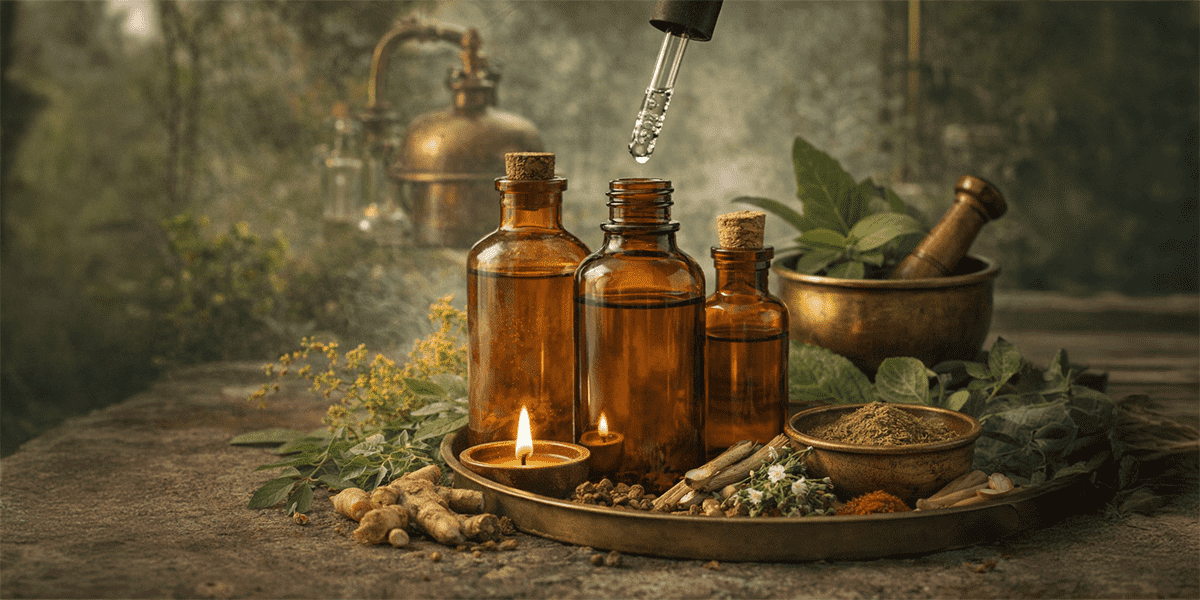
Arka preparations are liquid herbal distillates described in traditional Ayurvedic literature, particularly in texts such as Arka Prakasha. The term “Arka” refers to an extract obtained through a distillation process in which herbal substances are subjected to controlled heating and condensation.
Unlike powders, decoctions, or pastes, Arka preparations are volatile distillates containing water-soluble and aromatic fractions of herbs. Historically, these formulations were valued for their stability, lighter digestive profile, and ease of administration. In modern pharmacological terms, distillation isolates specific volatile compounds and aromatic principles, which may contribute to biological activity. However, the exact composition depends on the herb used, preparation method, and quality control standards.
Distillation in Ayurveda involves heating herbal material with water and collecting the condensed vapor. This process differs from simple decoction because it may concentrate certain volatile phytochemicals. Modern phytochemical research shows that many aromatic herbs contain bioactive volatile oils with anti-inflammatory, antimicrobial, or digestive properties (Bakkali et al., 2008). Therefore, Arka preparations may offer a lighter formulation for herbs traditionally used in digestive, respiratory, or metabolic support.However, potency varies depending on preparation quality. Standardization, hygiene, and appropriate dosing remain essential in clinical practice.
Several Arka preparations described in traditional practice are used to support digestion and metabolic balance. From a biomedical perspective, digestive health plays a central role in nutrient absorption, immune modulation, and systemic inflammation (Cryan et al., 2019).
Certain distilled herbal extracts may stimulate digestive secretions or modulate gut motility. For example, distillates of aromatic herbs such as cumin, fennel, or coriander are traditionally used for bloating and indigestion. Modern studies on these herbs support their carminative and digestive properties (Rather et al., 2016). It is important to clarify that Arka preparations should not be positioned as treatments for complex metabolic disorders such as diabetes or cardiovascular disease without appropriate medical supervision.
Liquid formulations may allow faster gastrointestinal absorption compared to certain solid preparations. This does not imply immediate or guaranteed relief but suggests that delivery format can influence pharmacokinetics. In herbal pharmacology, bioavailability depends on solubility, molecular structure, and individual digestive factors. Liquid herbal extracts are commonly used in multiple traditional systems for ease of dosing and compliance. However, claims of rapid or dramatic outcomes are not supported without condition-specific clinical trials.
Traditional Ayurvedic powders and decoctions may be difficult for some patients to consume regularly. Distilled preparations are often lighter in taste and easier to administer. Improved palatability may enhance adherence to prescribed regimens, particularly in elderly individuals or those with sensitive digestion. Adherence plays a measurable role in long-term therapeutic outcomes across all medical systems.
Arka preparations are derived from botanical sources, but “natural” does not automatically mean risk-free. Herbal distillates may interact with medications, particularly antihypertensives, anticoagulants, antidiabetic drugs, or psychiatric medications. Safety depends on correct identification of herbs, absence of contamination, appropriate dosing, and patient-specific assessment. Long-term use should be supervised by qualified practitioners, especially in individuals with chronic illness. Current research on many Ayurvedic distillates remains limited, and high-quality randomized controlled trials are needed to better understand long-term efficacy and safety.
Ayurveda traditionally emphasizes individualized treatment based on constitution (Prakriti), digestive capacity, and disease stage. Arka preparations may be selected as part of a broader therapeutic plan rather than as standalone remedies. Personalization in integrative medicine is increasingly recognized as important in optimizing therapeutic response (Ashley, 2016). However, personalization must be grounded in careful assessment rather than generalized claims.
Distillation techniques may reduce certain types of plant waste compared to bulk decoction methods. However, sustainability depends on responsible sourcing of herbs, ethical harvesting, and quality control practices. Modern herbal medicine increasingly emphasizes good manufacturing practices, testing for heavy metals, and contamination screening to ensure patient safety.
Arka medicines represent one of several classical pharmaceutical forms within Ayurveda. Their continued relevance depends on rigorous quality standards, clinical oversight, and integration with modern diagnostic evaluation. While traditional texts describe wide-ranging applications, contemporary practice requires evidence-informed positioning. Arka preparations may serve as supportive interventions for digestive regulation, mild inflammatory conditions, and metabolic balance when used appropriately. They should not be presented as substitutes for conventional medical treatment in serious conditions without robust supporting evidence.
Arka medicines illustrate the sophistication of classical Ayurvedic pharmaceutics. Their distilled format offers potential advantages in palatability and targeted delivery of volatile phytochemicals. However, responsible integration requires transparency about limitations. Clinical evidence remains variable across specific herbs and indications. Patients with chronic diseases should seek medical evaluation before initiating any herbal therapy. Ayurveda continues to evolve when traditional knowledge is interpreted with scientific caution and patient safety at the forefront.
Ashley, E.A. (2016). Towards precision medicine. [LINK]
Bakkali, F. et al. (2008). Biological effects of essential oils: A review. [LINK]
Cryan, J.F. et al. (2019). The microbiota–gut–brain axis. [LINK]
Rather, M.A. et al. (2016). Foeniculum vulgare: A comprehensive review of its traditional use and pharmacology. [LINK]
This article is intended for educational purposes only and does not constitute medical advice. Arka preparations and other Ayurvedic medicines should be used only under qualified supervision. Individuals with chronic medical conditions or those taking prescription medications should consult a healthcare professional before initiating herbal therapy.